
APIs power modern applications by connecting mobile apps, web platforms, and backend services. An industry report found that 94% of companies experienced security incidents in production APIs in the past year, highlighting how frequently attackers target exposed endpoints.
A vulnerability in an API can expose sensitive data or allow attackers to manipulate critical actions such as payments, orders, or account operations.
API penetration testing methodology provides a structured workflow to assess those risks. It maps endpoints, models attacker paths, and tests authentication, authorization, input handling, and business logic in a repeatable way.
In this guide, you will learn the full API pentesting methodology step by step, including discovery, access control testing, abuse scenarios, and practical reporting practices.
What Is API Penetration Testing?
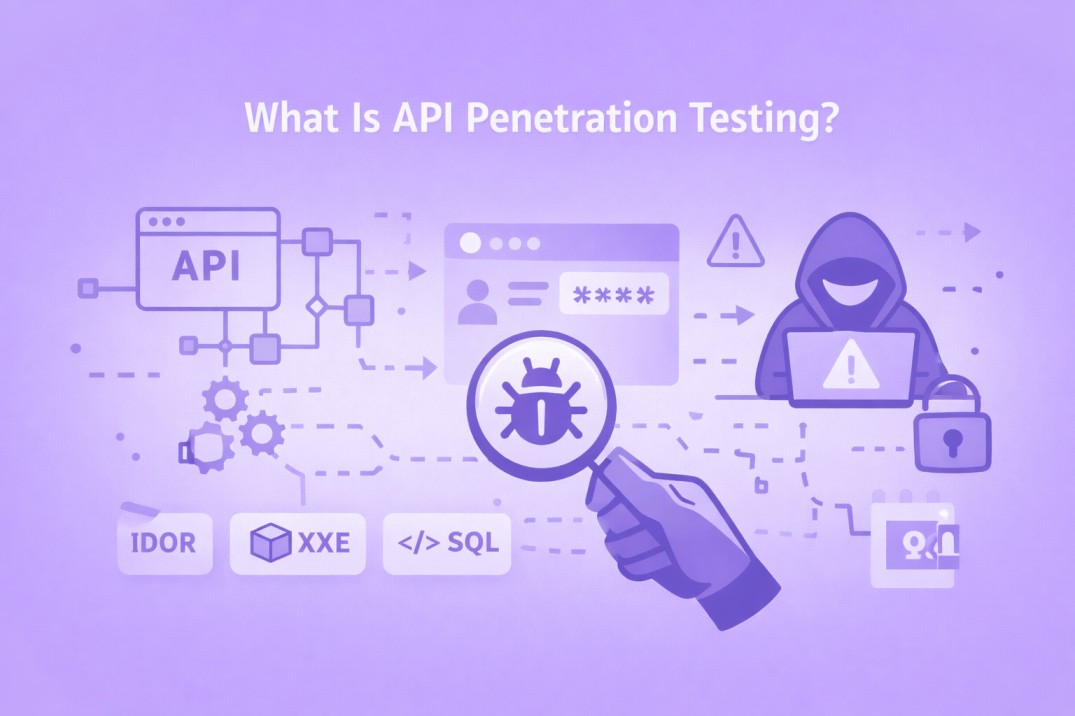
API penetration testing is a security assessment that evaluates APIs for vulnerabilities by simulating real attacker behavior. Testers analyze authentication, authorization, input validation, business logic, and data exposure to identify weaknesses before attackers exploit them.
Unlike automated API security testing, API pentesting involves manual testing, workflow analysis, and attack path validation to uncover issues such as broken object-level authorization, privilege escalation, and logic flaws.
Key Takeaways
API pentesting focuses on endpoints, tokens, and resource identifiers, not user interfaces.
The process follows a structured workflow including discovery, authentication testing, authorization validation, and business logic analysis.
Effective testing combines manual analysis with automated checks to identify realistic attack paths.
The goal is risk reduction and secure API design, not just vulnerability counts.
What “API Pentesting Methodology” Actually Means (and what it is not)
API pentesting methodology refers to a structured and repeatable process used to evaluate the security of APIs. It combines a clear workflow, supporting artifacts, and decision criteria that guide testers through the entire engagement.
A proper methodology includes steps such as endpoint discovery, threat modeling, test case development, and evidence collection. It functions more like a security playbook or runbook than a list of tools.
Many teams misunderstand methodology as simply running tools such as API security scanning or checking items from the OWASP API Top 10. Tools help, but they do not define the process.
A real methodology ensures repeatability and coverage by documenting API endpoints, identifying resources and roles, defining test cases, and recording proof of exploit. That approach allows security teams to reproduce findings and validate fixes later.
API penetration testing also differs from traditional web application testing. Web tests often interact with user interfaces, while API testing focuses directly on endpoints, requests, and responses.
Attackers can access resources through identifiers, tokens, or parameters without any UI restrictions. Hidden endpoints, internal routes, and machine-to-machine interactions expand the attack surface significantly.
The goal of an API pentest is not to report the largest number of vulnerabilities. The real outcome is risk reduction. A strong engagement identifies realistic attacker paths, validates access control boundaries, and proves whether sensitive resources can be abused. Evidence such as reproducible requests, responses, and impact statements helps engineering teams understand and fix the root cause.
The Core Artifacts You Build During an API Pentest (the secret to completeness)
A strong API pentest does not rely on memory or scattered notes. Testers build a small set of structured artifacts that guide the entire engagement. These artifacts create coverage, traceability, and repeatability. They also help connect discovery, testing, and reporting into one consistent workflow.
Three artifacts form the backbone of a professional API pentesting methodology: the API inventory, the threat model with abuse cases, and the security test matrix. Together they transform raw endpoint data into a clear testing strategy.
API Inventory (your single source of truth)
An API inventory is a structured catalog of every discovered endpoint. It acts as the central map of the API attack surface.
Each entry typically records hostnames, base paths, HTTP methods, parameters, authentication requirements, roles, and expected responses. Security teams often extract this information from sources such as OpenAPI or Swagger specifications, Postman collections, API gateway logs, and proxy traffic captures.
A useful inventory also includes data classification for each endpoint. For example, endpoints returning PII, financial records, account details, or authentication tokens deserve higher testing priority than simple public metadata.
Another key step involves identifying high-risk endpoint shapes. Numeric IDs, predictable UUID patterns, admin routes, export endpoints, and bulk report APIs frequently introduce access control weaknesses. Such patterns often lead to issues like object-level authorization flaws or data exposure.
The inventory becomes the foundation for later testing phases. Authorization testing uses the identifiers discovered in this catalog. Data exposure checks rely on understanding which endpoints return sensitive fields. Prioritization decisions also depend on this surface map.
Threat Model + Abuse Cases (turn inventory into attacker paths)
Once the API surface is mapped, the next step is turning that information into realistic attacker scenarios. That process forms the API threat model.
Threat modeling examines who can interact with the API and how they might abuse it. Testers usually define roles such as anonymous users, authenticated customers, privileged administrators, and service accounts. Each role has different permissions and potential attack paths.
Trust boundaries also play a critical role. APIs may receive requests from mobile apps, single-page web apps, partner integrations, or internal microservices. Crossing these boundaries sometimes exposes unexpected access paths or data flows.
Another useful technique involves identifying “money paths.” These are workflows tied directly to business value, such as account registration, authentication, billing operations, refunds, withdrawals, promo codes, or inventory reservations. Attackers frequently target these flows because small logic errors can create financial abuse opportunities.
Abuse cases derived from the threat model guide later testing phases. They help testers design business-logic attacks, authorization bypass attempts, and multi-step exploit chains.
Test Matrix (endpoint × risk × test case × evidence)
A security test matrix converts the inventory and threat model into structured test coverage.
Many pentests rely on generic checklists. Checklists alone rarely provide complete coverage because they are not mapped to actual endpoints. A matrix solves that problem by linking specific endpoints with risk categories and test scenarios.
A typical matrix includes columns such as:
Endpoint or resource
User role
Risk category
Test steps
Expected secure behavior
Evidence required
For example, an endpoint like /api/orders/{id} might appear multiple times in the matrix. One row could test object-level authorization, another could test data exposure, and another might examine rate limiting or abuse patterns.
The test matrix becomes the reporting backbone of the engagement. Each completed test produces evidence such as request and response pairs, proof of exploit, or confirmation that controls work correctly. Security teams can also reuse the matrix later for regression testing and future assessments.
API Penetration Testing Methodology: (Step by Step Workflow)
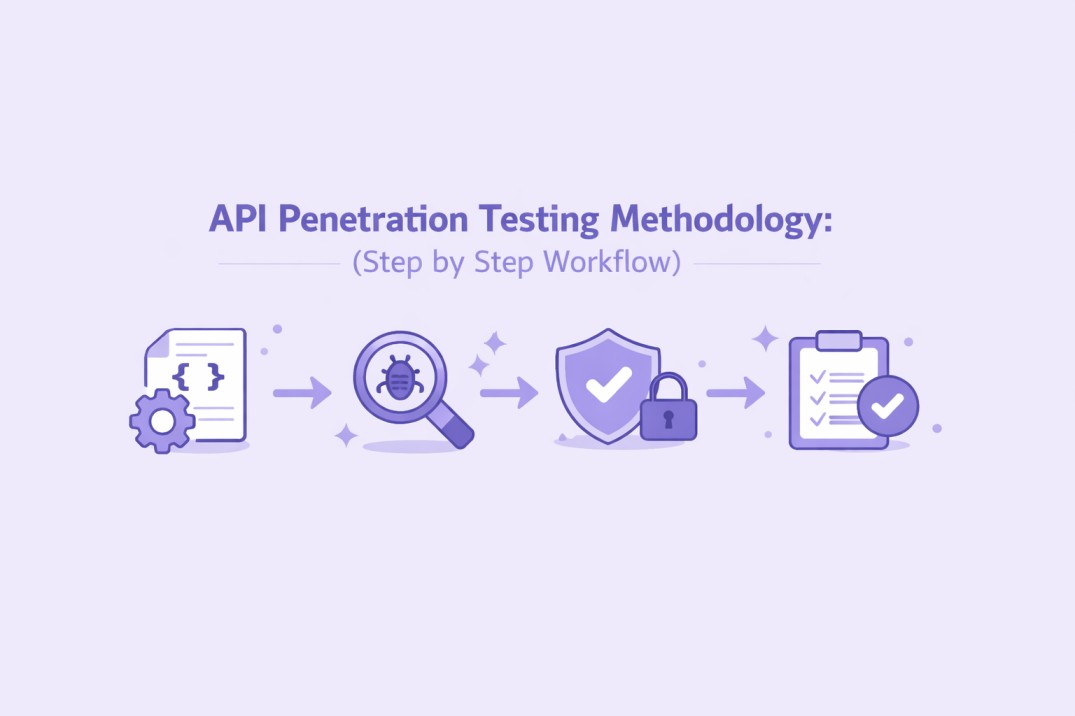
A professional API pentest follows a structured workflow rather than random testing. Each phase examines a specific part of the API attack surface, from endpoint discovery to authorization logic and business workflows.
The methodology below reflects how real API pentest engagements are executed step by step. Each phase builds on artifacts created earlier, including the API inventory, threat model, and test matrix, ensuring testing remains systematic, traceable, and repeatable.
Phase 0 — Scoping & Rules of Engagement
Every engagement begins with clear scope definition and testing boundaries. Without proper scoping, teams may test the wrong environment or trigger unintended disruption.
Scope That Matches Real Risk
APIs often exist across public, partner, and internal environments. Security teams must confirm which systems are in scope, including production, staging, or development environments.
Testing requires multiple user roles, usually two normal users and one privileged account. These accounts allow testers to validate authorization boundaries and tenant isolation.
Rules of engagement also define safety constraints. Teams must document limits for rate testing, destructive actions, and production data handling to ensure testing remains controlled and non-disruptive.
Success Criteria and Deliverables
Before testing begins, stakeholders should define what success looks like. A complete API pentest validates critical workflows, access controls, and data exposure risks.
Deliverables typically include:
API endpoint inventory
Security test matrix
Reproducible vulnerability findings
Remediation guidance
Retest validation
Phase 1 (Discovery & Recon)
Discovery maps the true API attack surface. Many vulnerabilities exist in endpoints that developers never documented.
Documented vs Shadow Endpoints
Start with official sources such as OpenAPI specifications, Swagger.json files, Postman collections, and SDK documentation.
Then look for shadow endpoints. These often appear in:
mobile application traffic
web app network requests
proxy logs
legacy API versions
Tools such as Burp or ZAP proxying help capture real client requests and reveal hidden routes.
Behavioral Profiling
After mapping endpoints, testers analyze how the API behaves.
Important signals include:
authentication mechanisms (JWT, OAuth, API keys)
rate limiting behavior
pagination and filtering parameters
error response patterns
Verbose error messages may expose internal logic, parameter names, or backend services.
Phase 2 (Authentication Testing)
Authentication testing verifies that the API correctly proves who the caller is before granting access.
Token Lifecycle Security
Most APIs use JWT, OAuth tokens, or API keys. Testing evaluates the full token lifecycle:
token issuance
expiration rules
refresh token behavior
logout and revocation
Testers also check whether stolen tokens can be replayed from another device or IP address.
Proper session management ensures tokens are short-lived and invalidated when sessions end.
Authentication Bypass Patterns
Attackers often target secondary endpoints that skip authentication checks.
Common examples include:
export endpoints
debug routes
internal services
Testing also evaluates brute-force protections, rate limiting, and MFA flows to ensure attackers cannot guess credentials.
Phase 3 (Authorization Testing)
Authorization flaws are among the most dangerous API vulnerabilities because they allow attackers to access data or actions they should never reach.
Industry research found that 57% of organizations experienced an API related breach in the past two years, highlighting how frequently broken authorization logic leads to real world data exposure.
Authorization determines what an authenticated user can access, and most real API breaches occur when these checks fail.
Object Level Authorization (BOLA / IDOR)
Many APIs use identifiers such as order IDs, user IDs, or document IDs inside requests.
Testers replace these identifiers with other valid values to verify whether the system checks resource ownership.
Testing must cover:
read operations
update actions
delete operations
export endpoints
nested resources
Multi tenant systems must also enforce strict isolation using identifiers such as tenant_id or workspace_id.
Function Level Authorization (BFLA)
Function level testing evaluates whether users can perform privileged actions.
Examples include:
admin endpoints
configuration routes
support tools
Privilege escalation may occur when attackers change HTTP methods, hidden parameters, or request paths.
Two escalation patterns are common:
horizontal escalation (user accessing another user’s data)
vertical escalation (user gaining administrator capabilities)
Phase 4 (Input Handling & Injection)
APIs constantly process external input. Weak validation allows malicious payloads to reach backend services.
Contract Validation
Many APIs define request schemas using JSON validation rules or OpenAPI specifications.
Testing verifies whether the API rejects:
unexpected fields
incorrect data types
malformed JSON structures
Parsing inconsistencies between JSON, XML, or GraphQL inputs may also allow filter bypass.
Injection Testing
Injection vulnerabilities occur when input reaches backend systems without sanitization.
Common cases include:
SQL injection
NoSQL injection
command injection
template injection
Another critical risk is server side request forgery (SSRF). APIs that fetch URLs from user input may allow attackers to access internal services.
Phase 5 (Data Exposure & Privacy Failures)
APIs sometimes expose more information than intended, even when access control works.
Excessive Data Exposure
Endpoints may return sensitive fields such as:
email addresses
internal identifiers
account metadata
Testers compare responses across roles to confirm that field-level authorization works correctly.
Logging and Caching Leaks
Sensitive information should never appear in logs, cache responses, or debugging headers. Testing verifies that systems follow data minimization and proper redaction practices.
Phase 6 (Abuse Resistance)
APIs must resist automation and resource abuse, not just direct attacks.
Rate Limiting
Security testing verifies whether rate limits apply to:
IP addresses
user accounts
API tokens
Weak implementations may trust spoofed headers or apply limits inconsistently.
Resource Consumption
Certain endpoints may allow large payloads, heavy database queries, or bulk exports.
Testing checks whether APIs enforce limits on pagination size, request frequency, and processing cost.
Phase 7 (Business Logic & Workflow Testing)
Many serious vulnerabilities appear in business workflows rather than technical flaws.
Workflow Modeling
Testers analyze state transitions within application workflows.
Examples include:
order creation → payment → shipping
refund processing
coupon application
Invalid transitions such as double refunds or unpaid order shipping reveal logic flaws.
Race Conditions
Parallel requests may exploit timing gaps.
Examples include:
double withdrawals
duplicate coupon usage
inventory manipulation
Systems must enforce transaction integrity and idempotency protections.
Phase 8 (Modern API Styles)
Modern systems often use multiple API technologies.
GraphQL
GraphQL testing evaluates:
schema exposure
query complexity limits
resolver level authorization
Weak limits may allow attackers to extract large datasets through nested queries.
gRPC
gRPC services rely on protobuf definitions and metadata headers.
Security testing verifies:
input validation
authentication propagation
service discovery controls
Webhooks
Webhook endpoints must enforce:
signature verification
replay protection
strict URL validation
Weak webhook design can allow event spoofing or SSRF attacks.
Phase 9 (Automation vs Manual Testing)
Effective API security uses both automated tools and manual analysis.
What Automation Handles?
Automation works well for:
schema validation
baseline security checks
CI pipeline testing
These checks provide consistent regression detection.
What Requires Manual Testing?
Manual testing is essential for:
authorization logic
business workflows
chained attack paths
Human analysis identifies subtle vulnerabilities that scanners miss.
Phase 10 (Evidence, Reporting, and Retest)
The final phase turns technical findings into actionable security improvements.
Evidence Standards
Each vulnerability should include:
reproducible request and response pairs
affected endpoint details
clear impact explanation
Evidence ensures engineers can reproduce and validate the issue.
Remediation and Retesting
Reports should include practical remediation guidance, such as improved authorization checks or schema validation.
After fixes are deployed, testers perform a retest to confirm remediation and ensure no related issues remain.
Practical Methodology Summary (the “one-page playbook”)
Security teams often need a quick reference for the entire API pentesting workflow. The phases explained above form a repeatable lifecycle that helps testers move from discovery to validated remediation. This condensed playbook captures the full methodology in one view while preserving coverage across the API attack surface.
The 10-Step Workflow (Quick Reference)
0. Scope and Rules of Engagement
Define authorized environments, test accounts, and safety constraints. Clear scope prevents disruption and ensures the pentest targets the correct systems.
1. Build the API Inventory
Catalog all endpoints, methods, parameters, and authentication requirements. Sources include OpenAPI documentation, gateway logs, and captured client traffic.
2. Create the Threat Model
Map attacker scenarios based on roles, trust boundaries, and sensitive workflows such as authentication, payments, or account management.
3. Perform Discovery and Reconnaissance
Identify both documented and hidden endpoints through proxy traffic analysis, version enumeration, and behavioral observation.
4. Test Authentication Controls
Evaluate identity verification mechanisms including JWT, OAuth, or API key usage, along with token lifecycle protections such as expiration and revocation.
5. Test Authorization Controls
Validate object ownership and role-based access control. Replace identifiers and attempt privilege escalation to detect BOLA or function-level authorization flaws.
6. Evaluate Input Handling and Injection Risks
Test request validation and schema enforcement. Identify injection paths such as SQL, NoSQL, command injection, or SSRF.
7. Inspect Data Exposure
Review responses for excessive data exposure, hidden fields, or sensitive attributes visible across different user roles.
8. Test Abuse Resistance
Validate protections against automation and enumeration. Confirm that rate limits, throttling controls, and resource safeguards prevent large-scale abuse.
9. Test Business Logic and Workflows
Analyze state transitions and application rules. Look for issues such as double refunds, duplicate transactions, or workflow bypasses.
10. Report Findings and Validate Fixes
Document vulnerabilities with reproducible evidence and remediation guidance, then perform a retest to confirm fixes remove the risk.
Frequently Asked Questions
How is API pentesting different from API security testing or scanning?
API security scanning uses automated tools to detect common issues such as injection patterns or missing security headers. API pentesting involves manual attacker simulation to test authorization logic, business workflows, and chained exploits that scanners often miss.
Do I need OpenAPI or Swagger to pentest effectively?
No. OpenAPI or Swagger documentation helps identify endpoints faster, but testers can still perform an API pentest without documentation by analyzing client traffic, proxy logs, and endpoint patterns to discover hidden routes.
What’s the minimum set of roles or accounts to test authorization properly?
At least two standard user accounts and one privileged account. This setup allows testers to check object ownership, horizontal access control, and vertical privilege escalation across the API.
How do you test business logic safely without harming production?
Most testing happens in staging environments with test data. When production testing is required, teams follow strict rules of engagement and avoid destructive actions or workflows that affect real users.
How often should API pentests be performed?
Most organizations run API pentests annually or after major changes. Between tests, automated checks in CI pipelines and security scans help maintain continuous API security.